
A package’s got work to do.
It has to protect the product, run through the warehouse efficiently and arrive at the customer’s door in good shape. For e-commerce brands, sustainable packaging presents another question: how do you cut out unnecessary materials without creating other problems in fulfilment?
That’s much more feasible when you have a 3PL managing your inventory and shipping orders daily.
Relentless Fulfilment can also manage packaging as part of the complete fulfillment process including custom packaging, kitting, assembly, subscription boxes, DTC orders and returns.
What Sustainable Packaging Looks Like in a 3PL Setting
Sustainable packaging doesn’t mean simply swapping paper for plastic.
That really depends on what you are shipping, how your customers are ordering it and how your warehouse is processing each SKU.
A lightweight apparel order has different packaging needs from glass skincare products. A subscription box with several products needs another approach.
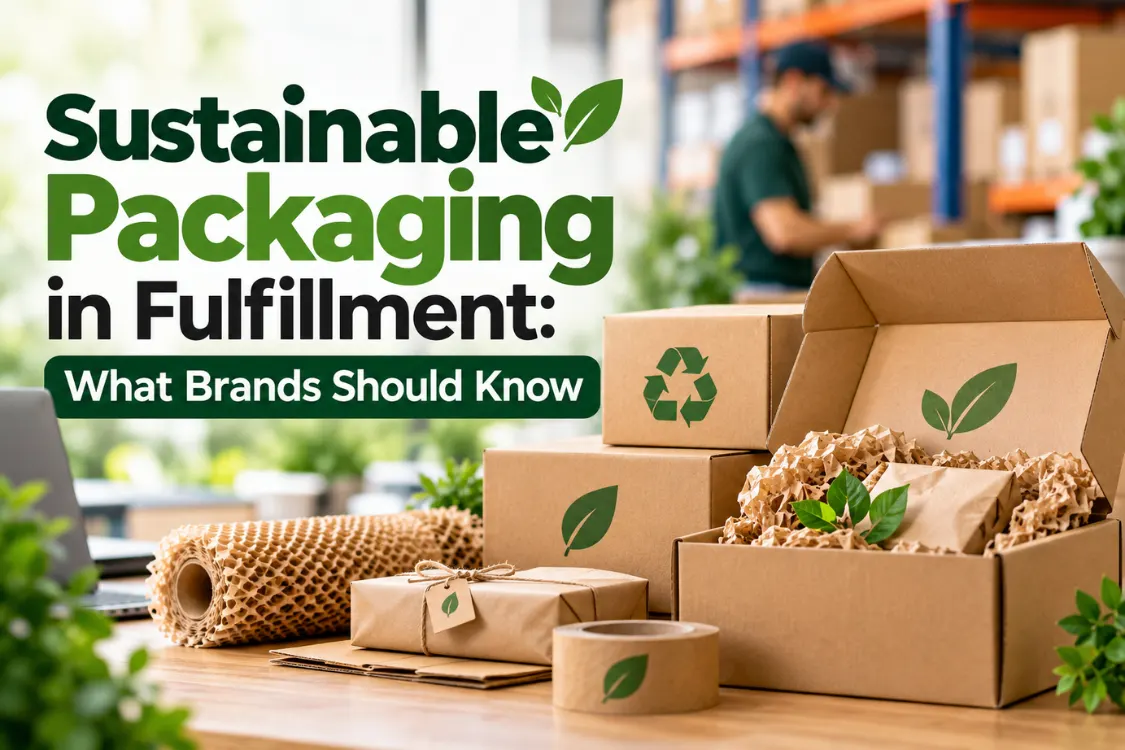
For a fulfillment operation, eco-friendly packaging can include:
- Right-sized cartons and mailers
- Recyclable or recycled materials
- Paper-based void fill
- Fewer unnecessary inserts
- Reusable packaging where practical
- Packaging designed around the product and order type
It is important to make sure that the change works operationally.
If the product is not protected by a new mailer, a damaged shipment may require replacement. Now you have used packaging twice instead of once.
The aim is to reduce waste, and still get the product to the customer from the warehouse in a safe manner.
How Relentless Fulfilment Fits into Sustainable Packaging
Packaging is not done in isolation from fulfilment.
Relentless provides receiving, storage, picking, packing and shipping services as well as custom packaging, kitting, assembly and subscription box fulfilment.
Start With Your Actual Orders
Before changing packaging, look at what customers are ordering.
Are most orders single-SKU shipments? Are customers buying bundles? Do certain products regularly ship together?
These patterns can tell you whether you need a variety of box sizes or whether most orders can be satisfied with fewer packaging types.
Single products, three-piece bundles, promo kits, and monthly subscription boxes can be offered by a skincare brand. One package probably won’t do all four well.
Relentless supports bundling and kitting, allowing packaging to be planned around the actual order instead of added at the last step.
Look at Warehouse Space
Packaging materials take up warehouse space, too.
If you add a number of new carton sizes then those cartons have to be received, stored, replenished and kept to hand for the packers.
The question isn’t just whether the material is more environmentally friendly in terms of sustainable fulfillment. It has to work inside the warehouse too.
Sometimes a limited number of carefully selected packaging formats are easier to handle.
Right-Sizing Can Reduce Unnecessary Material
An oversized box leaves empty space around the product. That can mean more void fill, more material, and a larger package moving through the carrier network.
Right-sizing can help reduce that excess.
But the smallest possible package isn’t always the right answer. It still needs enough room to protect fragile products and remain practical for the packing team.
A packaging review should consider:
- Product size and weight
- Product fragility
- Typical items per order
- Packaging material
- Packing time
- Shipping requirements
- Return requirements
That last point is easy to miss.
Don’t Forget Returns
Packaging doesn’t stop being relevant once an order leaves the warehouse.
If a customer returns a product, the original packaging may need to be opened, reused, or replaced. If the package makes returns difficult, additional materials may be needed anyway.
Relentless supports reverse logistics, including returns processing, sorting, restocking, and disposition workflows.
That makes packaging part of the complete fulfillment cycle, not just the outbound shipment.
Sustainable Packaging for Ecommerce Brands with Custom Orders
Not every ecommerce order follows the same pattern.
Some brands sell individual products. Others sell bundles, subscription boxes, promotional kits or curated mixes.
This is where ecommerce sustainable packaging needs more planning.
Relentless supports custom kitting, assembly, branded inserts and subscription boxes.
Imagine a wellness brand running a seasonal promotion. Rather than shipping three products separately, the fulfilment team can bundle them together into one kit with the appropriate insert and packaging.
The key is to package design around the order structure.
Packaging Instructions Need to Be Clear
Clear warehouse instructions are also part of a sustainable packaging programme.
One SKU requires a recyclable mailer, another requires protective material, and a third SKU is shipped as part of a subscription kit. The fulfilment team needs to know what applies to each order.
Otherwise, workers are making decisions at the pack station.
That can lead to inconsistent packaging, excess material, damaged products, or slower packing.
Relentless uses a WMS and client portal for visibility into inventory, orders, and fulfillment activity. Its integrations connect ecommerce platforms and marketplaces with the warehouse.
The technology doesn’t choose the packaging for you. It helps the operation execute the process consistently.
Building Green Packaging Solutions That Actually Work
Don’t change everything at once.
Start with your highest-volume SKUs or most common order types. Look at the packaging they’re using, how much empty space remains, and whether the product arrives safely.
Then test the change in the actual fulfillment environment.
Ask:
- Can we use less material?
- Does the package still protect the product?
- Can the warehouse pack it efficiently?
- Does it work for bundles and kits?
- Can customers handle returns easily?
- Does it require additional warehouse storage?
This makes eco-friendly fulfillment more practical. You’re thinking about what that box does to storage, picking, packing, shipping, and returns.
Final Thoughts
Sustainable packaging only works if it fits with how your fulfilment operation actually works. For brands that utilise custom packaging, kitting, subscription boxes, DTC or B2B fulfilment, the goal is to reduce unnecessary material without making the order harder to pack or the product harder to protect.
Relentless Fulfilment helps brands with custom packaging, kitting, assembly, inventory management and fulfilment workflows that are built around their products and order needs.
If you’re considering a packaging overhaul as your brand grows, reach out to the Relentless Fulfilment team to discuss what the process could look like for your products and order volume.